Physical Address
304 North Cardinal St.
Dorchester Center, MA 02124
Physical Address
304 North Cardinal St.
Dorchester Center, MA 02124

A simple, realistic approach to setting a grocery budget for a family of five so you can spend less, waste less, and finally stop feeling stressed at checkout every week.
The total flashed on the screen and I did that quiet mental math. We didn’t even buy anything special. Just normal food. Somehow it still felt like too much.
If you’re feeding a family of five, you already know this feeling. Groceries disappear fast. Plans don’t always stick. And that budget you set in your head somehow gets ignored at checkout.
I stopped guessing and started treating our grocery budget like a real system. These are the 11 practical tips to set a realistic grocery budget for a family of 5 that actually helped us stop overspending.

Most budgets fail before you even step into the store.
I used to pick a random number and hope for the best. No plan behind it. No structure. Just vibes.
Here’s what goes wrong:
Takeaway: A grocery budget only works if it reflects your real habits, not your ideal ones.
Before setting a new budget, look at your current one.
I checked a few weeks of receipts and quickly realized I was way off. I thought we spent less. We didn’t.
This gives you a starting point that actually makes sense.
Takeaway: You can’t fix what you don’t measure.

Life happens. Kids eat more some weeks. You run out of everything at once.
Instead of a strict number, I use a range.
This gives flexibility without losing control.
Takeaway: A flexible budget is easier to stick to than a rigid one.
This made my spending clearer overnight.
When one category gets too big, I adjust before checkout.
Takeaway: Seeing where your money goes helps you fix it faster.
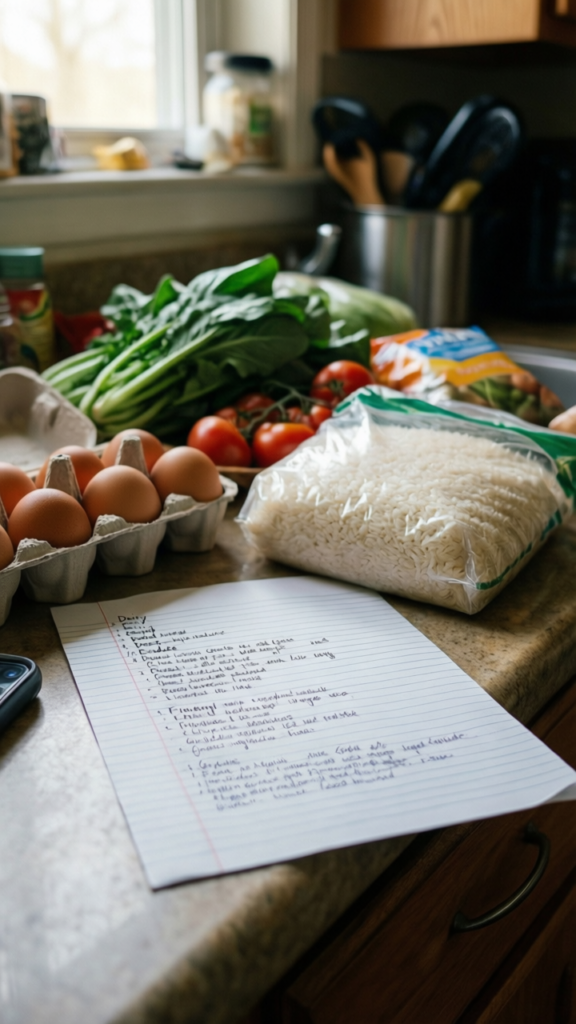
This sounds obvious. I ignored it for years.
I used to plan meals first, then deal with the cost later. That never worked.
Now I reverse it.
Takeaway: Your meals should follow your budget, not fight it.
Protein eats up your budget fast.
Instead of buying a little bit of everything, I choose one or two main proteins per week.
Less variety. More savings. Still plenty of food IMO.
Takeaway: Fewer proteins keep your grocery bill under control.
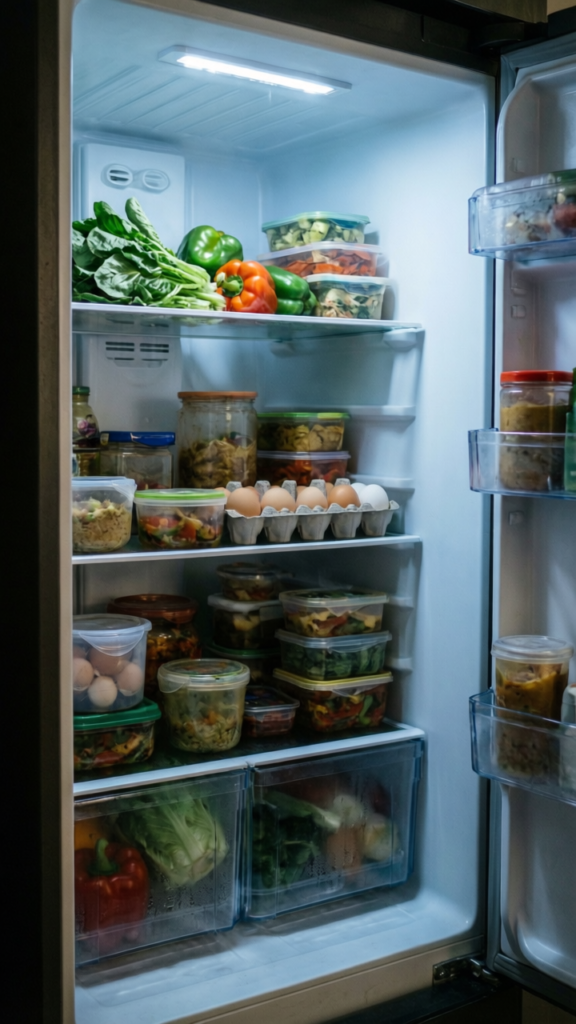
I used to skip this step. Big mistake.
Now I do a quick check before making any list.
You already paid for it. Use it.
Takeaway: Your kitchen inventory is part of your budget.
There are certain foods I always rely on.
These stretch meals and fill everyone up.
Takeaway: Staples are the foundation of a realistic grocery budget.
Leftovers used to feel random. Now they’re part of the plan.
Example. Roast chicken one night, soup the next.
Takeaway: Leftovers reduce both cooking time and spending.
This one quietly kills your budget.
Every extra trip means extra spending. It’s never just one item.
Now I stick to one main shopping trip per week.
If we run out of something, we improvise. It’s not the end of the world 🙂
Takeaway: Fewer store visits mean fewer impulse purchases.
I’ve made this mistake too many times.
Hungry shopping leads to snacks. Lots of snacks.
Now I eat before I go and stick to my list.
It sounds small, but it works.
Takeaway: Your mindset affects your spending more than you think.
Some weeks go over budget. That’s normal.
What matters is what you do next.
No guilt. Just small corrections.
Takeaway: Consistency matters more than perfection.

Every family is different, but here’s a simple example.
From that, I build a focused grocery list that fits the budget.
Nothing fancy. Just practical.
These are the habits that actually keep me on track.
There are always leftovers
No one needs constant variety
If it’s not planned, it’s not in the cart
Eggs, rice, and pasta save the day.
Takeaway: Simple habits make budgeting easier to maintain.
Setting a grocery budget for a big family isn’t about cutting everything down to the bare minimum. It’s about building a system that works even on busy, messy, real-life weeks.
These practical tips to set a realistic grocery budget for a family of 5 are simple on purpose. They need to work when you’re tired, when plans change, and when you just want to get through the week.
Start with one or two changes. Track what happens. Adjust as you go.
Because the goal isn’t to hit a perfect number every week. The goal is to spend less, waste less, and stop having that moment at checkout where you wonder how things got so expensive again.