Physical Address
304 North Cardinal St.
Dorchester Center, MA 02124
Physical Address
304 North Cardinal St.
Dorchester Center, MA 02124


This ultimate debt free checklist for beginners breaks down realistic budgeting, saving, and debt payoff steps that help families reduce financial stress and build lasting money habits.
The credit card statement sat unopened on the counter for three days because honestly, nobody wants to ruin a perfectly decent Tuesday with financial disappointment.
At some point, the stress stops feeling dramatic and just becomes background noise.
You buy groceries while mentally calculating minimum payments.
You avoid checking balances before bed.
You promise yourself next month will feel different.
That cycle gets exhausting fast.
The good news is this. Most people do not need a perfect financial system to become debt free. They need a realistic plan they can actually follow without feeling like they joined a money punishment cult.
This ultimate debt free checklist for beginners breaks the process into manageable steps that real people can stick with.

A lot of debt advice sounds simple on paper.
Spend less.
Pay more.
Done.
Meanwhile real life exists.
Kids need new shoes.
Cars make weird noises.
Someone in the house suddenly decides strawberries are a personality trait and now groceries cost seventeen dollars more every week.
The problem usually is not laziness.
It is overwhelm.
That is why a debt free checklist helps so much. It creates structure when finances feel chaotic.
Takeaway: A simple debt free checklist helps beginners stay focused and reduces financial overwhelm.

This part feels awful initially.
Still necessary.
You cannot fix numbers you refuse to look at.
Write down:
No guessing.
No rounding down to feel emotionally safer FYI.
I avoided adding everything together for months because I thought seeing the total would crush me.
Honestly, the uncertainty felt worse.
Once everything sat on paper, the debt finally looked like a problem with steps instead of some giant invisible monster haunting the kitchen table.

Beginners often overcomplicate budgeting immediately.
You do not need fifteen color-coded categories and an emotionally supportive spreadsheet.
Start with:
Then cut unnecessary spending temporarily.
Notice I said temporarily.
People quit debt payoff plans because they think budgeting means never experiencing joy again.
Small leaks matter.
Especially the sneaky little purchases pretending to be harmless.
This surprises beginners sometimes.
Yes, you should save while paying debt.
Without emergency savings, every unexpected expense goes straight back onto a credit card. That creates the financial version of running on a treadmill while carrying groceries.
Aim for:
And no, concert tickets are not emergencies :/
Emergency funds create breathing room.
Even small savings reduce panic dramatically.
Takeaway: A small emergency fund protects debt payoff progress from everyday financial surprises.
Most beginners succeed faster once they choose a clear strategy.
Two common methods work well.
Pay smallest debts first.
This creates quick wins and motivation.
Great for people who need momentum.
Pay highest interest rates first.
This saves more money long term.
Great for highly disciplined personalities.
I preferred the snowball method because early wins kept me emotionally invested.
Mathematically perfect plans do not matter if people quit after three weeks.
Motivation matters more than internet debates sometimes IMO.
This sounds obvious until life gets stressful.
Many people continue using credit cards while trying to pay them off.
That is like mopping the floor while the sink still overflows.
Try:
I made online shopping annoyingly inconvenient.
Removing stored payment information reduced random spending immediately.
Turns out laziness can become a financial strategy.
Temporary sacrifice creates long-term freedom.
Not glamorous.
Still effective.
Look at:
You do not need to become miserable.
You just need enough extra margin to attack debt faster.
We started cooking simpler meals during heavy debt payoff months.
Nothing tragic happened.
Nobody wrote dramatic memoirs about reduced takeout consumption 🙂
Cutting expenses helps.
Extra income speeds things up massively.
Options include:
Even an extra few hundred dollars monthly changes debt payoff timelines quickly.
Do not burn yourself out chasing perfect financial progress.
Debt freedom matters.
Your mental health matters too.
Balance helps sustainability.
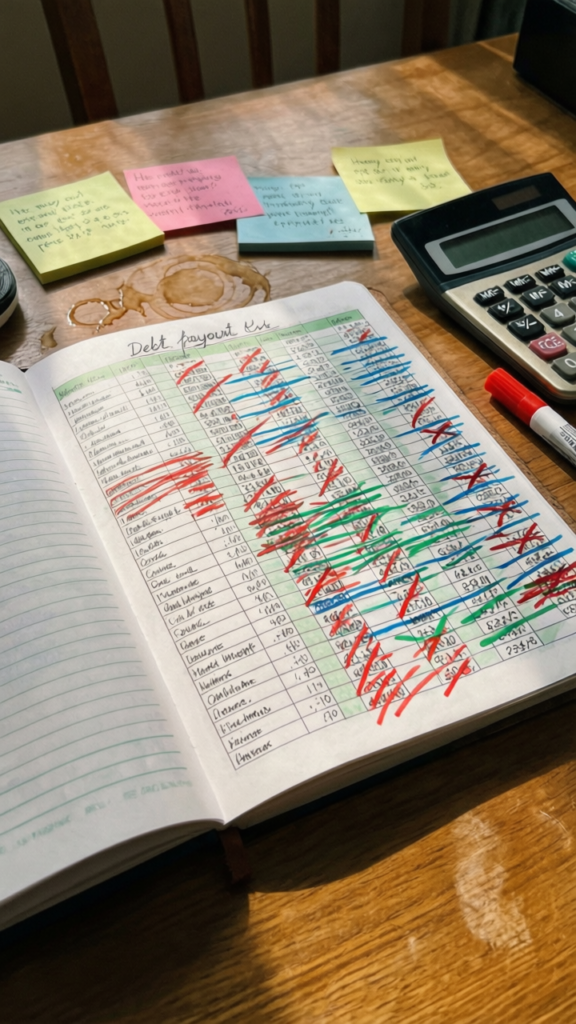
People stay motivated when progress feels visible.
Use:
Crossing off balances feels deeply satisfying.
Like revenge against your past financial decisions.
Watching minimum payments disappear one by one changed everything emotionally.
The budget started breathing again.
That feeling becomes addictive in the best possible way.
Takeaway: Visible progress keeps beginners motivated during long debt payoff journeys.
Something always happens eventually.
Car repairs.
Medical bills.
School expenses.
Life being aggressively inconvenient.
Setbacks do not erase progress.
Beginners often panic after one difficult month and assume they failed completely.
That mindset destroys consistency faster than the setback itself.
Instead of:
Why am I bad at money?
Ask:
What adjustment helps me recover faster?
That shift matters tremendously.
Debt payoff takes time.
If you wait until complete freedom to celebrate, the process feels endless.
Celebrate:
Keep celebrations affordable obviously.
A fancy debt-free dinner charged onto a credit card creates extremely confusing energy.
This part changed my finances more than any budgeting app.
Stress spending feels real.
Bored spending feels real.
Reward spending definitely feels real.
Notice:
Awareness creates control.
I realized exhaustion triggered most of my impulse shopping.
Bad days somehow convinced me decorative storage baskets would solve emotional problems.
They did not.
Now I own suspiciously organized closets.
Debt freedom is not just about paying balances.
It is about staying free afterward.
Important habits include:
Consistency beats intensity every single time.
People rarely change finances overnight.
Small habits repeated for years create the biggest transformation.

A few mistakes slow progress dramatically.
Extreme budgeting often backfires.
People need sustainable routines.
Tiny spending leaks become huge over time.
Daily convenience spending adds up fast.
Some people pay debt faster because:
Comparison kills motivation quickly.
Focus on your own progress.
Takeaway: Sustainable financial habits create longer lasting debt freedom than extreme short-term changes.
This ultimate debt free checklist for beginners is not about becoming perfect with money.
It is about becoming more intentional.
Debt freedom usually happens through ordinary choices repeated consistently:
Some months will feel discouraging.
Some balances will shrink painfully slowly.
Some grocery receipts will still feel personally offensive.
Keep going anyway.
Because one day you will realize the financial stress that once felt constant has finally gone quiet.