Physical Address
304 North Cardinal St.
Dorchester Center, MA 02124
Physical Address
304 North Cardinal St.
Dorchester Center, MA 02124


A practical and relatable guide to the everyday habits that help families build a debt free lifestyle without extreme budgeting or unrealistic financial pressure.
The takeout containers were still sitting on the counter while I refreshed our banking app pretending the numbers might somehow improve overnight.
One bill had already cleared. Another payment was coming in two days. Meanwhile my daughter needed new shoes because apparently children wake up with bigger feet every six business days. My husband and I were both working hard, paying bills on time most months, and still feeling like we could never quite catch up.
That is the frustrating part about debt.
You can look responsible from the outside while quietly feeling stressed every single time your phone buzzes with a payment notification.
The truth is this. A debt free lifestyle usually does not come from one giant financial breakthrough. It comes from small habits repeated often enough that they slowly change your entire relationship with money.
Some habits save you hundreds. Others save your sanity.
Here are the 10 essential habits for a debt free lifestyle that genuinely helped our family breathe easier financially.


Not obsessively. Just consistently.
Most people avoid checking their accounts because they think it will stress them out. Ironically, avoiding the numbers usually creates more anxiety.
Once my husband and I started doing quick weekly money check-ins, things became less chaotic.
We looked at:
The meetings were not glamorous. Sometimes we sat there eating leftover pasta while discussing why toothpaste suddenly costs luxury handbag prices :/
Still, awareness changed everything.
Takeaway: Small weekly check-ins prevent big financial surprises later.
This habit sounds obvious until stress enters the chat.
A lot of people use credit cards to create breathing room temporarily. Then temporary turns into normal life.
We used to justify small purchases constantly:
Then suddenly twelve tiny purchases became one giant balance.
A debt free lifestyle starts when you stop viewing credit cards as emotional support tools.
Nothing destroys financial progress faster than surprise expenses.
The car breaks down. Somebody gets sick. The washing machine decides retirement sounds nice.
Without emergency savings, every problem goes straight back onto a credit card.
Start small:
That cushion creates breathing room immediately.
FYI, financial peace often starts with knowing one unexpected expense will not ruin your month.

Impulse spending usually happens fast.
You feel stressed. Tired. Bored. Slightly annoyed at life. Suddenly you are online comparing throw pillows like your emotional stability depends on decorative fabric choices.
One habit that changed my spending completely was the 48-hour rule.
Before buying anything unnecessary, wait 48 hours.
Most impulse purchases lose their magic surprisingly fast.
That last question hurts a little sometimes.
Takeaway: Delayed spending decisions prevent emotional purchases.

I know. Everybody says this.
But honestly, eating out constantly drains money quietly. Especially when you add delivery fees, drinks, tips, and those random desserts nobody planned to order.
We did not stop restaurant meals completely. We just became more intentional.
A few things helped:
Some nights dinner was scrambled eggs and toast. Nobody died.
A debt free lifestyle often looks less fancy and more practical.
Life gets busy fast.
Between parenting, work deadlines, errands, and trying to remember whether you already moved the laundry, financial due dates become mentally exhausting.
Automating payments helped us:
We automated:
Simple systems matter because motivation disappears sometimes.
And honestly, nobody feels financially disciplined every single Tuesday forever 🙂
This habit changed more than our budget.
A lot of financial stress comes from trying to keep up with lifestyles that do not actually fit our reality.
New cars. Expensive vacations. Constant shopping. Upgraded everything.
Meanwhile many people quietly carry huge debt balances behind those polished social media photos.
Some of our smartest financial choices looked boring:
Nobody clapped for those decisions. Our bank account did eventually.
A debt free lifestyle feels much lighter once you stop performing financial success for strangers.
Takeaway: Financial freedom matters more than looking financially impressive.
Tiny extra payments matter more than people realize.
Every extra payment reduces interest and shortens payoff time.
We used:
Even an extra fifty dollars helps.
The important part is consistency, not perfection.
IMO, debt payoff becomes easier once you focus on momentum instead of dramatic overnight results.
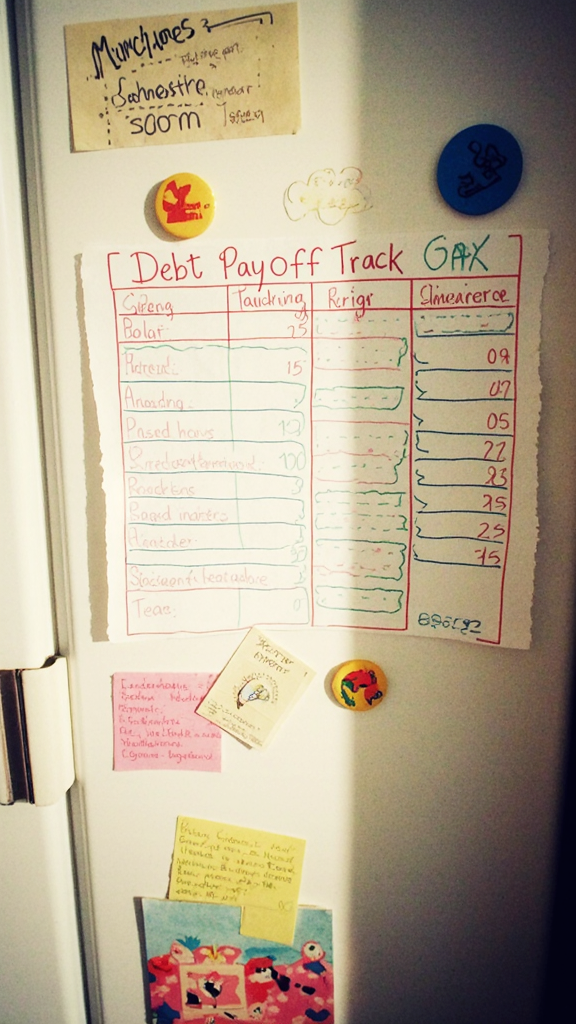
People lose motivation when goals become abstract.
That is why visual reminders help so much.
We used:
My daughter loved coloring sections whenever we hit milestones. Somehow paying off debt became less depressing once markers and stickers entered the situation.
Your brain needs reminders of why these sacrifices matter.
This one took me the longest to understand.
A debt free lifestyle usually looks very ordinary.
It looks like:
Not exciting. Very effective.
People want dramatic financial transformations, but most financial success comes from repetitive habits nobody posts online.
That truth actually helped me relax.
Because suddenly success felt possible without becoming some ultra-disciplined budgeting robot.
Takeaway: Consistent boring habits quietly create long-term financial stability.
Sometimes improving finances means stopping harmful habits first.
Here are common patterns that slow people down.
Avoiding the numbers does not make them disappear.
Not every stressful week deserves a shopping trip.
Random spending creates random results.
Comparison spending becomes expensive fast.
Most people fighting debt are not irresponsible. They are overwhelmed, exhausted, and trying to survive normal life pressures.
That distinction matters.
Honestly, progress happened slower than I expected.
There was no magical month where everything suddenly became easy.
Instead:
That emotional shift mattered just as much as the numbers.
A debt free lifestyle is not about perfection. It is about creating enough stability that money stops controlling every decision and every bad mood.
And trust me, sleeping peacefully feels better than almost anything impulse shopping promises to deliver.
The habits that create financial peace are usually simple. Not easy, but simple.
Check your finances regularly. Spend with intention. Build savings slowly. Stay aware of emotional spending. Keep your goals visible when motivation fades.
Most importantly, stop expecting perfection from yourself.
Real life is messy. Kids need shoes unexpectedly. Grocery bills get weirdly aggressive. Cars break down at the worst possible times.
But small consistent habits still work, even inside imperfect lives.
And over time, those habits create something better than temporary financial relief.
They create breathing room.