Physical Address
304 North Cardinal St.
Dorchester Center, MA 02124
Physical Address
304 North Cardinal St.
Dorchester Center, MA 02124


A realistic and motivating guide to creating a debt free living vision board that keeps your financial goals visible, personal, and easier to stick with during real everyday life.
The credit card bill sat open on the counter while I pretended to care about folding tiny socks from the dryer.
You know that feeling when you keep avoiding the numbers because somehow not looking feels safer? Meanwhile your brain still thinks about it while brushing your teeth, driving to work, or lying awake at 1:13 a.m. wondering why blueberries suddenly cost a small fortune.
That was the season when I made my first debt free living vision board. Not because I thought glue sticks and magazine clippings would magically erase debt. I just needed something positive to stare at besides bank notifications and grocery receipts.
And honestly? It helped way more than I expected.
A good vision board keeps your goals visible when motivation disappears. It reminds you why saying no to random spending actually matters. Plus it feels oddly satisfying cutting up magazines like a financially stressed kindergarten teacher 🙂
Here are 9 creative ideas for your debt free living vision board that feel motivating without becoming cheesy.


Before we get into ideas, let’s clear something up.
A vision board is not magic. You cannot tape a photo of a beach house onto cardboard and expect your credit score to start levitating.
But visual reminders work because debt payoff takes forever sometimes. People lose momentum when the process feels boring and repetitive. A vision board helps reconnect daily choices to long-term goals.
When my husband and I started paying off debt, the hardest part was not math. It was staying emotionally focused after months of slow progress.
That is where visual motivation matters.
Takeaway: A debt free living vision board keeps your goals emotionally real instead of abstract.
A lot of vision boards focus on luxury stuff. Fancy vacations. Dream cars. Kitchens larger than entire apartments.
That can be fun, but honestly, debt freedom often looks quieter.
For my board, I added:
Because deep down, I did not want designer handbags. I wanted peace.
Search for images that represent:
Those images hit differently when you are deciding whether another impulse purchase is worth it.
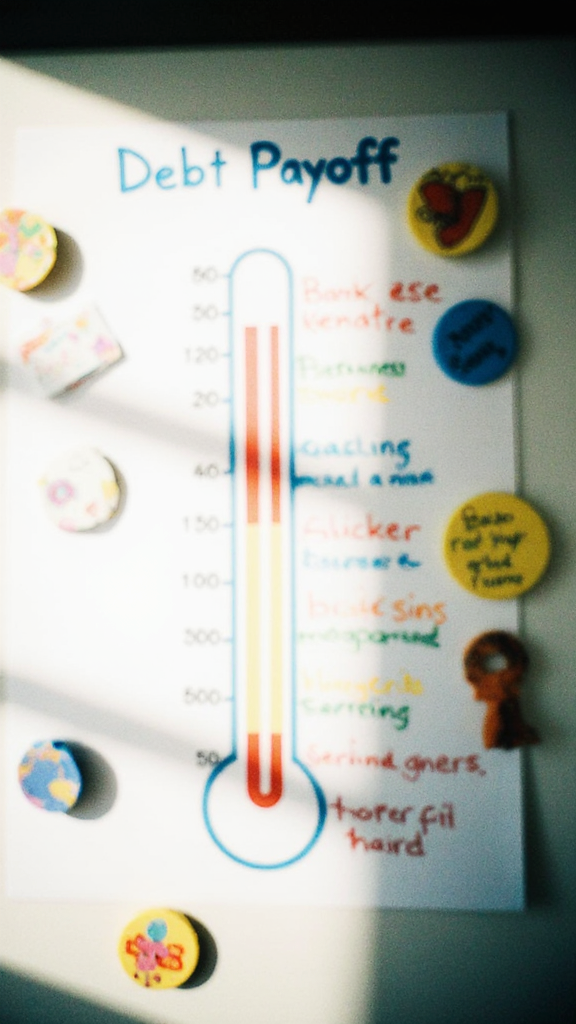
This one sounds simple because it is.
Draw a giant thermometer or progress bar showing your total debt amount. Then color it in every time you pay something off.
Watching the number shrink feels weirdly addictive.
My daughter even started cheering whenever we colored another section. Suddenly debt payoff became less depressing and more like a family project.
Which honestly made it less scary.
Takeaway: Visible progress keeps you motivated when the process feels slow.
Pretty pictures alone are nice, but numbers create focus.
Write down:
Keep it realistic though. Nothing kills motivation faster than impossible timelines.
I once wrote an overly ambitious payoff goal after watching one too many budgeting videos online. Three weeks later I was stress-eating crackers while moving numbers around our budget spreadsheet like a confused accountant.
Now I prefer goals that challenge me without making normal life impossible.
Debt payoff can start feeling like endless punishment if you never celebrate anything.
That is why I added mini rewards onto my debt free living vision board.
Nothing huge. Just small reminders that life still exists outside budgeting.
Some ideas:
Tiny rewards help your brain stay engaged.
Otherwise financial goals start feeling like one long lecture from an angry math teacher.
This sounds backward, but hear me out.
Sometimes debt makes people obsess over what they lack. Meanwhile they stop appreciating what already exists in front of them.
One section of my board included:
It reminded me that financial freedom was supposed to protect this life, not replace it.
IMO, gratitude keeps people from panic spending nearly as much as budgeting does.
Takeaway: Appreciating your current life makes it easier to stop chasing unnecessary upgrades.

This became my favorite part.
I literally added funny little reminders of spending habits we wanted to stop.
Examples:
One corner of the board had a photo of fancy iced coffee with the words You have coffee at home.
Petty? Maybe.
Effective? Absolutely.
The point is not guilt. The point is awareness.
Some motivational quotes feel like they were written by robots trying to sell protein powder.
Skip those.
Choose words that actually sound human.
A few examples:
Short. Honest. Slightly imperfect.
That kind of motivation lasts longer because it feels believable.

Debt freedom affects the whole household, even if kids do not fully understand it.
We made a tiny section for family dreams:
My daughter added stickers and crooked drawings all over it. Was it Pinterest-worthy? Absolutely not.
Did it make the goal feel personal? Very much yes 🙂
A debt free living vision board becomes more powerful when it reflects real people instead of perfect lifestyles.
Placement matters more than people think.
If your vision board hides in a closet behind old holiday decorations, it cannot help you much.
Put it somewhere visible:
Mine stayed near our kitchen table because that was where most financial decisions happened.
And honestly, seeing it before online shopping helped more than I care to admit.
Takeaway: Your goals should interrupt your habits sometimes.
A debt free living vision board should motivate you, not make you feel worse.
Here are mistakes I see all the time.
Your board does not need matching fonts and designer aesthetics.
Real life already feels messy enough.
Debt freedom is not only about expensive dreams. Sometimes it is about sleeping better at night.
Numbers matter, but emotions drive behavior.
Include feelings you want:
Goals change. Progress happens. Life shifts.
Update your board regularly so it still feels connected to your current reality.
Please do not turn this into another overwhelming project.
You do not need:
You just need visual reminders of why this journey matters.
Some easy options:
Simple works fine.
Half the battle is simply staying emotionally connected to your financial goals after the excitement fades.
Debt payoff changes your habits slowly. First your spending changes. Then your mindset changes. Then eventually your entire relationship with money starts feeling calmer.
That is why a debt free living vision board matters.
Not because cardboard has magical powers. Because staying motivated during long financial goals is hard. Some days you feel focused and responsible. Other days you almost buy an unnecessary air fryer because it was 40 percent off and apparently that means destiny.
The goal is not perfection.
The goal is building a life where money stops controlling every decision, every argument, and every quiet moment of stress before bed.
And honestly, even a messy little vision board can help remind you why that future is worth fighting for.