Physical Address
304 North Cardinal St.
Dorchester Center, MA 02124
Physical Address
304 North Cardinal St.
Dorchester Center, MA 02124


These 10 quick wins for budgeting a family of 5 offer realistic ways to save money, reduce financial stress, and manage everyday family life without feeling overwhelmed or deprived.
The grocery cart looked full for about three minutes. Then the cashier announced the total, one kid asked for candy, another reminded me about a school project due tomorrow, and suddenly my carefully planned budget felt like a tiny paper boat sinking in a storm.
Budgeting for a big family sounds simple until real life enters the chat. Somebody always needs shoes. Somebody always eats the snacks you just bought yesterday. And somehow the laundry multiplies like it has personal goals.
If you are trying to figure out how to budget for a family of 5 without losing your sanity, you are definitely not alone. The good news? You do not need extreme budgeting tricks or color-coded spreadsheets worthy of a NASA engineer.
These quick wins helped my family spend smarter, stress less, and finally stop wondering where all the money disappeared every month 🙂

A lot of budgeting advice feels overwhelming immediately. Fifteen spending categories. Complicated percentages. Financial jargon nobody asked for.
When I first started budgeting for our family of five, I simplified everything into basic groups:
That was it.
Once I stopped trying to build the perfect budget system, I actually started following one.
Seriously. Your first family budget does not need to look impressive.
Mine was written in a cheap notebook with crossed-out numbers and coffee stains. Still worked better than pretending everything would magically balance itself.
Takeaway: Simple budgets work better than perfect budgets you never use.

Pinterest meal plans look adorable until Wednesday hits and everyone suddenly hates chicken.
Meal planning saved our grocery budget, but only after I stopped planning like an overly ambitious food blogger.
Now I build meals around:
For a family of five, this system works surprisingly well:
Flexible night usually means tacos because tacos solve many emotional problems. FYI.
I stopped buying ingredients for random one-time recipes.
Now I buy foods that work across multiple meals:
Using the same ingredients repeatedly saves money fast.
Takeaway: Realistic meal planning cuts grocery costs without making family life miserable.
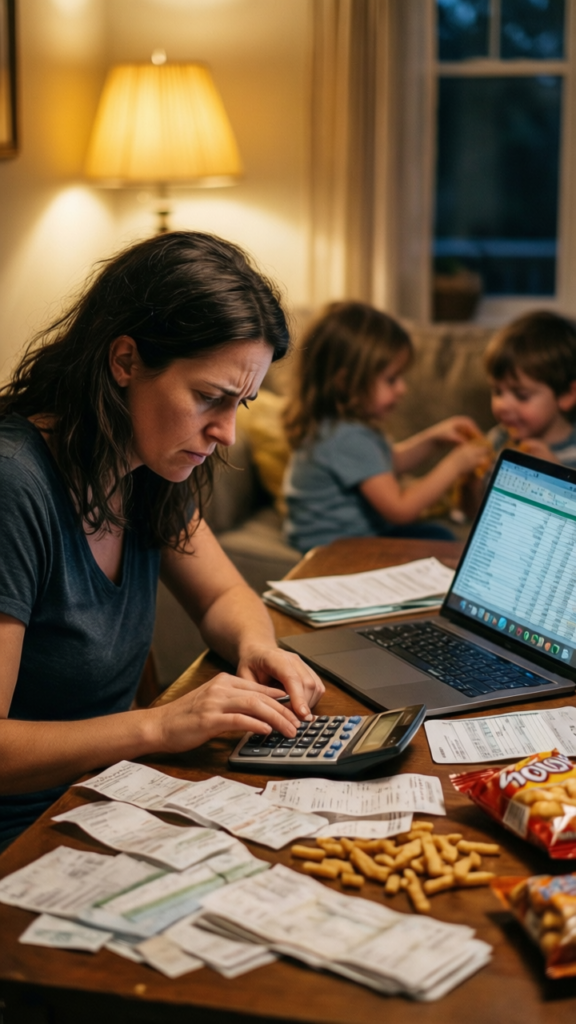
Money disappears quickly in big families because there are constant little expenses.
Field trips. Birthday parties. Sports snacks. Toothpaste that vanishes into another dimension somehow.
I started assigning money before payday instead of hoping we would figure it out later.
Before spending anything, we decide:
This small habit stopped so much financial chaos.
Because honestly, if extra money sits in checking too long, somebody suddenly needs fast food and a Target run :/
One thing that helped me massively was separating:
Less confusion. Fewer accidental overdraft surprises.
Takeaway: Pre-planning your money reduces stress and impulsive spending.
This lesson hurt my feelings a little.
I used to compare our life constantly:
Meanwhile, I was stressing over grocery totals and pretending everything felt fine.
Honestly, my kids remember:
They rarely remember expensive stuff.
That realization changed how I approached budgeting for our family.
Some families spend more because they earn more. Some families spend more because they are drowning in debt quietly.
You never fully know.
Takeaway: Comparison ruins budgets faster than almost anything else.
Big families mean bigger surprises.
Someone always gets sick. Shoes split open unexpectedly. School forms appear needing money immediately before breakfast. Incredible timing every single time.
Even a small emergency fund makes family budgeting less stressful.
Do not wait until you can save thousands.
Start with:
Small savings still create breathing room.
If emergency savings stays in your main checking account, it magically turns into restaurant spending somehow.
Ask me how I know.
Takeaway: Small emergency funds protect your budget from constant setbacks.
Convenience spending destroyed our budget quietly for years.
Not luxury spending. Convenience spending.
Examples:
None felt dramatic individually. Together? Financial disaster.
I started keeping:
Sometimes convenience at home prevents expensive convenience outside the home.
That little trick saved us more money than canceling subscriptions honestly.
Takeaway: Convenience spending often causes bigger budget leaks than luxury spending.
This one feels controversial, but somebody has to say it.
Children do not need seventeen expensive extracurricular activities simultaneously.
At one point I felt pressure to enroll our kids in everything:
My calendar looked chaotic and our bank account looked concerned.
Now we prioritize:
The kids survived beautifully.
Actually, family life became calmer too.
Takeaway: More activities do not automatically create happier kids.
A family budget meeting sounds painfully serious. I know.
But ignoring money completely creates even bigger stress later.
The trick is keeping conversations short and simple.
Usually:
Ten minutes. Maybe fifteen.
Nobody needs a three-hour financial summit at the kitchen table.
Blaming each other never helps.
Family budgeting works better when everybody feels involved instead of attacked.
Takeaway: Short regular budget check-ins prevent bigger money problems later.

Children outgrow things at alarming speed.
I once bought expensive sneakers that fit my daughter for approximately six business days.
Buying secondhand changed everything for us financially.
We save the most money on:
Facebook Marketplace became one of my favorite budgeting tools unexpectedly.
Kids care way less than adults think they do.
Half the time they just want snacks and Wi-Fi anyway.
Takeaway: Buying used stretches a family budget without lowering quality of life.
This might be the most important tip in the entire article.
Budgets fail when they feel too restrictive.
If every dollar only covers bills and responsibilities, people eventually rebel against the budget completely.
We intentionally include:
Nothing extravagant. Just enough enjoyment to make life feel balanced.
Extreme budgeting works for about five minutes before burnout hits.
A realistic budget bends with real life instead of pretending real life does not exist.
IMO, that mindset shift changes everything.
Takeaway: Budgets should support your family, not punish them.
Learning how to budget for a family of 5 gets easier once you stop chasing perfection and focus on consistency instead.
Small habits matter:
Those simple choices add up over time.
And honestly, budgeting is not really about restricting your family. It is about creating stability so normal life stops feeling financially terrifying every month.
That kind of peace matters more than impressing anyone online ever will.